Share Howard Kenneth Klein's obituary with others.
Invite friends and family to read the obituary and add memories.
Stay updated
We'll notify you when service details or new memories are added.
You're now following this obituary
We'll email you when there are updates.
Select your format and elements to print

IN LOVING MEMORY OF Howard Kenneth Klein
Howard Kenneth
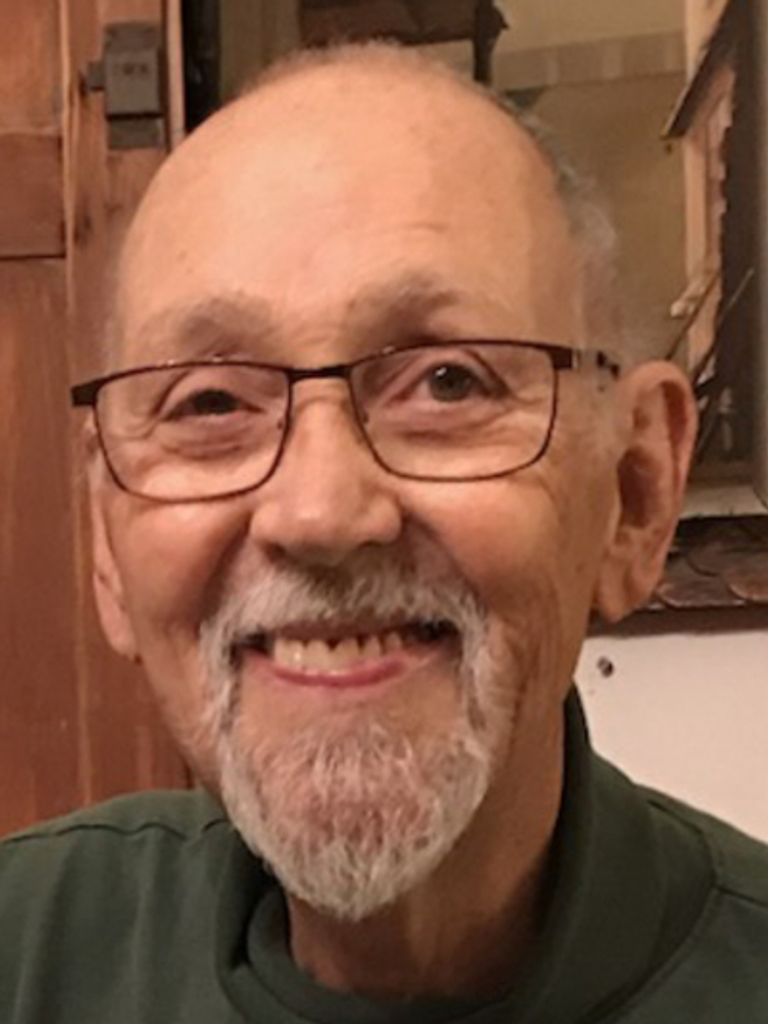
Klein
Jun 15, 1931 — Mar 1, 2021
Front Royal
Howard Kenneth Klein's Obituary
Howard Kenneth Klein
Howard Klein, of Front Royal, VA., died March 1, 2021 in Winchester, VA, after a long illness. He was 89 years old.
He is survived by two sons, Adam Charles Josef Klein, and Lawrence Parker ("Moondi") Klein; their wives, Tami Swartz and Nancy Green Klein; and three grandchildren: Lauren Windrow Klein and Connor Jackson Klein (children of Lawrence and Nancy) and David Kensington Brantley, son of Adam with his first wife, Kimberley Brantley, of Roswell, Ga.
Howard Klein and his wife Patricia Windrow were well known in Front Royal, having moved there in 1990. Patricia Windrow (1921-2013) established the Windrow Art Galleries on Main Street, and she became a well-loved member of the arts and business community. On her passing in 2013, the Town Council issued a Proclamation, naming her birthday, September 12, "Patricia Windrow Day."
Born June 15, 1931 in Teaneck, New Jersey, Howard became an accomplished musician, critic, and internationally influential foundation executive. After earning a Bachelor of Music degree from Southeastern Louisiana College (1952) he spent four years in the United States Air Force as a member of the 509th Air Force Band in Big Spring, Tx. He was discharged in 1956 at the rank of S/Sgt.
Klein attended the Juilliard School of Music in New York on a piano scholarship, earning the degrees of Bachelor (1959) and Master of Science (1961). Upon graduation, he taught theory in the Juilliard Dance Division for one year. He spent the summer of 1962 as a pianist with the American Dance Festival at Connecticut College for Women, accompanying classes under Bessie Schoenberg and attending composition classes with Martha Graham and Louis Horst. Juilliard then extended Klein's teaching contract, but then president, William Bergsma, recommended he audition for a job with The New York Times, left vacant by a resignation. The Times's chief music critic, Harold Schonberg, asked him to join the New York Times music department as a music critic/reporter in 1962. As a junior critic Klein reviewed as many as nine concerts a week. He became Recordings Editor for the Sunday Times and interviewed hundreds of notable international music figures, including Artur Rubinstein, Leonard Bernstein, Birgit Nilsson, Janet Baker (U.S. debut), Gian Carlo Menotti, Zoltán Kodály, Pierre Boulez, Aaron Copland, Witold Lutosławski and Vladimir Horowitz. Mr. Horowitz later said that Klein's comment to him that a generation of pianists did not know his playing prompted him to come out of retirement.
In 1963, composers John Cage and Lewis Lloyd presented the first documented performance of the enigmatic "Vexations" by Eric Satie as a marathon at New York's Pocket Theater, assembling a team of pianists to carry out the composer's instructions that the piece be repeated "840 times," which took from evening through noon the following day. Chief Critic Schonberg responded by sending a team of reviewers to cover the all-night event.
Marjorie Rubin, a reporter at the event, wrote: "An unexpected debut was slipped into the Pocket Theater at 10 o'clock [AM], when Howard Klein of the New York Times music staff, who had come to listen, stayed to play, substituting for a substitute who never showed up."
In 1967 Klein left the Times to become Assistant Director for Arts at the Rockefeller Foundation in New York, under director Norman Lloyd. His first grant was to support the work of Nam June Paik, the avant-garde Korean artist later renowned as 'the father of video art.' Over time Klein spurred the establishment of experimental video art labs at public television stations and universities around the United States.
Under Klein's direction the Foundation underwrote programs that linked creative artists in all fields with performance organizations which disseminated their work: residencies for playwrights with producing theaters, composers with symphony orchestras and opera companies, choreographers with dance companies, painters and sculptors with museums.
Upon Klein's retirement from the Foundation in 1986, John Rockwell wrote in The New York Times that he "is recognized as one of this country's most innovative and influential patrons of the contemporary creative artist." His programs involved "not just financial support but also opportunities to prepare and present the works supported. And he pioneered the practice of seeking other foundations and Government agencies to cooperate on programs. He also devised programs that maximized the impact and visibility of the Rockefeller Foundation, even if the actual dollar amounts given were less" than from other donors.
Marita Sturkin wrote in Afterimage, vol 14 no. 6, that Klein's departure "marks the end not only of a particular era at the Rockefeller Foundation, but also of an era of a specific kind of funding philosophy, in which a single individual dictates the direction and intent of the grants awarded, with a primary belief in providing for the needs of the individual artist."
While at the foundation, Klein helped found 42 non-profit arts organizations in all disciplines, including: The Sundance Institute (Utah), the Bay Area Video Coalition (San Franscisco), the Atlantic Center for the Arts (New Smyrna Beach, Fl), the Eliot Feld Ballet-Ballet Tech (New York), the Carter Family Memorial Music Center (Hiltons, Va.) and New World Records (New York). Internationally his programs involved exchange tours of American and sub-Saharan African arts groups; The American Center for Students and Artists in Paris, France, for a program of residencies for American artists; and Goldsmiths' College, University of London, to develop a holographic arts laboratory.
Among the many other grantees under Howard's aegis were composers Robert Ashley, Donald Erb, Lee Hoiby, David Hykes, Lee Konitz, Billy Taylor, Frederick Tillis and Charles Wuorinen; the Museum of Holography; the American Place Theater; video artist Stephen Beck; the American Shakespeare Festival Theatre and Academy of Connecticut; and the African American Institute.
After leaving Rockefeller, Klein was Director of Artists and Repertory for New World Records and consulted with foundations including the John D. and Catherine T. MacArthur Foundation, the DeWitt and Lila Wallace Foundation, the Pew Charitable Trusts, and the National Endowment for the Arts. He became president of the Carter Family Memorial Music Center after the death of its founder, Janette Carter, daughter of A. P. and Sara Carter.
As a pianist, Klein found occasional opportunities to perform in the Feld Ballet's "Love Song Waltzes" to Brahms's Liebeslieder-Waltzer for piano four hands with pianist Peter Longiaru; with Adam Klein in Schubert song cycles and other programs in New York City, Geneva NY, Bloomington IN, Central City CO, Front Royal VA and with and the Harrisburg (PA) Opera Association; and with Jimmy Gaudreau and Moondi Klein at concerts in New Freedom, PA and elsewhere.
From 1971 Klein was a Kriya Yoga student of Self-Realization Fellowship, founded in 1920 by Paramahansa Yogananda. He attended services regularly at Greenfield Retreat in Front Royal and contributed to its programs and support.
In lieu of flowers, Donation can be made to the Blue Ridge Hospice, 333 West Cork Street in Winchester, Virginia.
The Family directed Memorial Service will be at a later date.
Howard Kenneth Klein's Guestbook
Visits: 13
This site is protected by reCAPTCHA and the
Google Privacy Policy and Terms of Service apply.
Service map data © OpenStreetMap contributors